There are certain songs that instantly quiet the noise around us. The moment we hear them, our hearts feel lighter and our minds become peaceful. One of those timeless hymns is “Praise God From Whom All Blessings Flow,” often called The Doxology.
Many people search for praise god from whom all blessings flow chords because they want more than a chord chart. They want to worship, connect with God, and bring this beautiful hymn into their daily lives.
Whether you are a beginner guitarist, a worship leader, a church musician, or someone singing quietly at home, this guide will help you understand why this hymn continues to inspire millions around the world.
🎵 What Is “Praise God From Whom All Blessings Flow”?
This hymn is commonly known as The Doxology.
It was written by English minister and hymn writer Thomas Ken in 1674. For centuries, churches have sung these words as a simple expression of gratitude and praise.
The hymn reminds believers that every blessing comes from God.
Even today, many churches sing it before offerings, after prayer, or during worship services.
“Sometimes the simplest songs carry the deepest meaning.”
🍂 Why This Hymn Feels So Powerful
Life can become overwhelming. We worry about work, family, finances, and the future.
However, this hymn gently redirects our attention.
Instead of focusing on what is missing, it encourages us to recognize what we already have.
The message is beautifully simple:
- 🙏 God is the source of our blessings.
- ❤️ Gratitude changes our perspective.
- 🌎 Worship connects people everywhere.
- ✨ Simple words can create deep peace.
Because of this, many families pass this hymn from one generation to another.
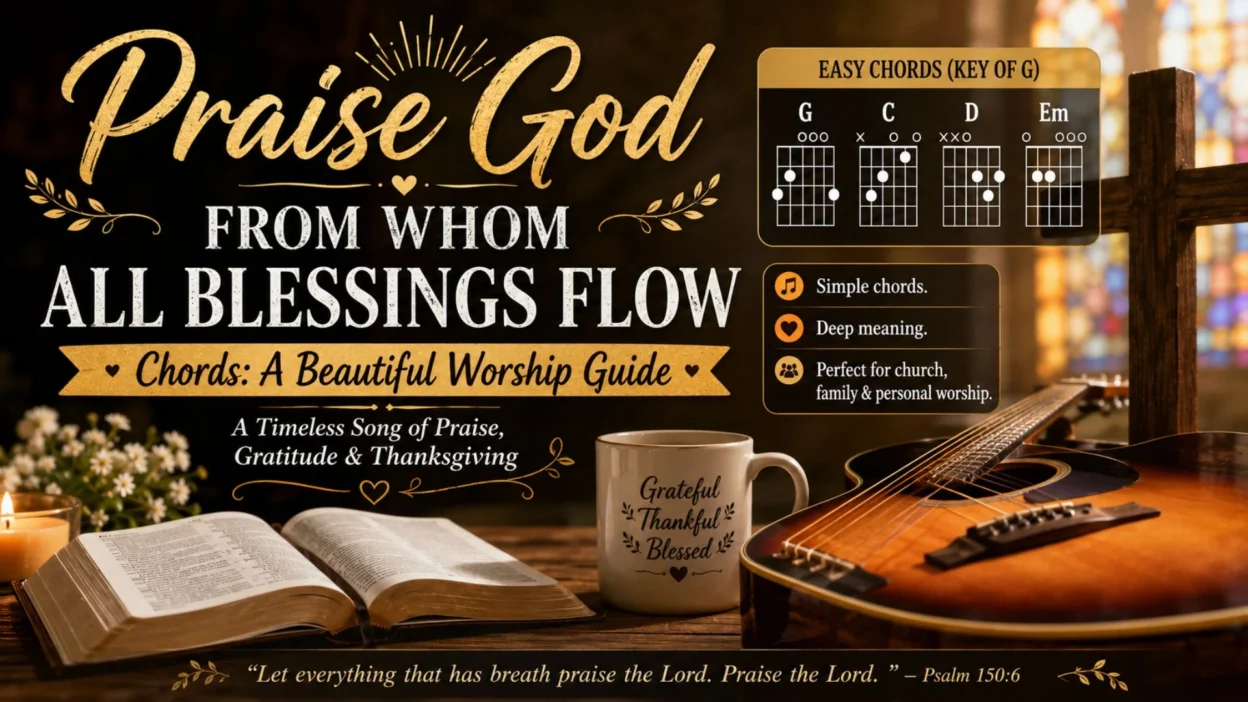
🎸 Praise God From Whom All Blessings Flow Chords (Simple Version)
Important note: To respect copyright and provide a safe reference, here is a short chord example and structure instead of reproducing a full copyrighted arrangement.
Many churches play it in the key of G major because it is easy for congregational singing.
Beginner-Friendly Chord Progression (Key of G)
Common chords used:
- G
- C
- D
- Em
These four chords often appear in many simple arrangements.
Suggested Practice Flow
Start slowly.
Focus on smooth transitions.
Keep a steady rhythm.
Sing naturally rather than forcing your voice.
Prioritize worship over perfection.
If you are a beginner, do not worry about making mistakes. Worship is about sincerity, not performance.
🙏 The Spiritual Meaning Behind the Lyrics
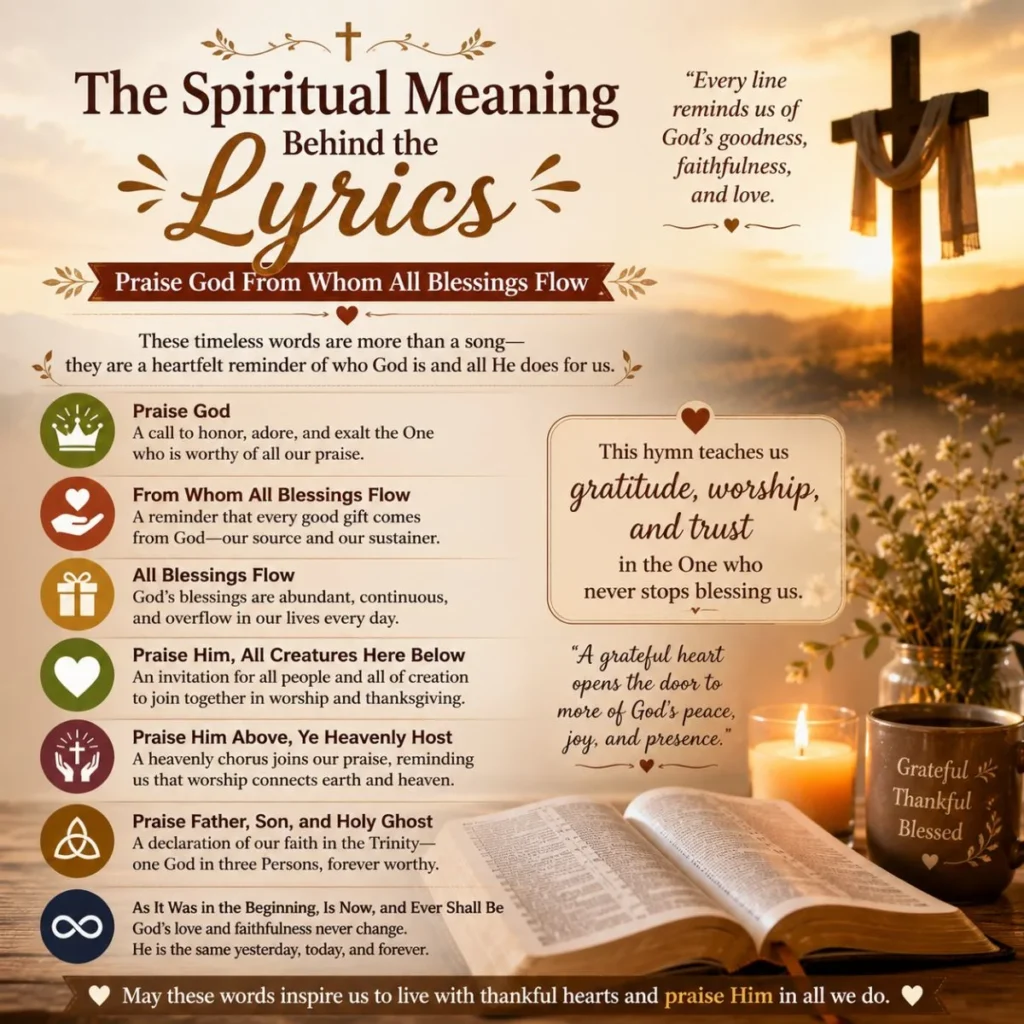
One reason people love this hymn is its message.
Every line points back to gratitude.
Sometimes, we all become distracted by daily responsibilities. Yet this hymn reminds us to pause.
Consider some blessings we often overlook:
The roof over our heads
The people who love us
The meals we share
The quiet moments of peace
The lessons life has taught us
When we notice these gifts, our hearts naturally become more thankful.
“Gratitude often begins when we stop rushing and start noticing.”
🍁 Real-Life Moments to Sing This Hymn
You do not have to wait until Sunday service.
Many people incorporate this hymn into everyday life.
Here are a few ideas.
During Morning Devotion
Start your day with a simple prayer and sing one verse quietly.
During Family Gatherings
Before meals, invite everyone to sing together.
During Difficult Seasons
When life feels uncertain, these words can provide comfort.
During Personal Reflection
Play the chords softly while journaling or praying.
During Thanksgiving Celebrations
This hymn beautifully complements moments of gratitude.
🍂 Why Musicians Love These Chords
Church musicians often recommend this hymn because it is approachable.
The melody is familiar, and the chord progression is beginner friendly.
Benefits of Learning It
Builds confidence for beginners
Strengthens worship leading skills
Improves chord transitions
Creates meaningful family moments
Encourages daily gratitude
Connects generations through worship
Most importantly, it helps shift your attention from stress to praise.
❤️ A Personal Reflection
Sometimes, we all feel exhausted.
There are days when prayer feels difficult and words are hard to find.
On those days, simple hymns become powerful prayers.
You do not need complicated language.
You do not need perfect singing.
Instead, you only need a grateful heart.
That is why this hymn continues to resonate after hundreds of years.
Its message never gets old because gratitude never goes out of style.
“The same God who provided yesterday is still faithful today.”
🎵 Beginner Worship Tips, Prayers, and Daily Inspiration
Learning praise god from whom all blessings flow chords is not only about playing an instrument. More importantly, it is about creating moments that draw your heart closer to God.
You do not need expensive equipment or years of experience to start. In fact, some of the most meaningful worship moments happen quietly at home.
🎸 Beginner Guitar Tips for Playing the Hymn
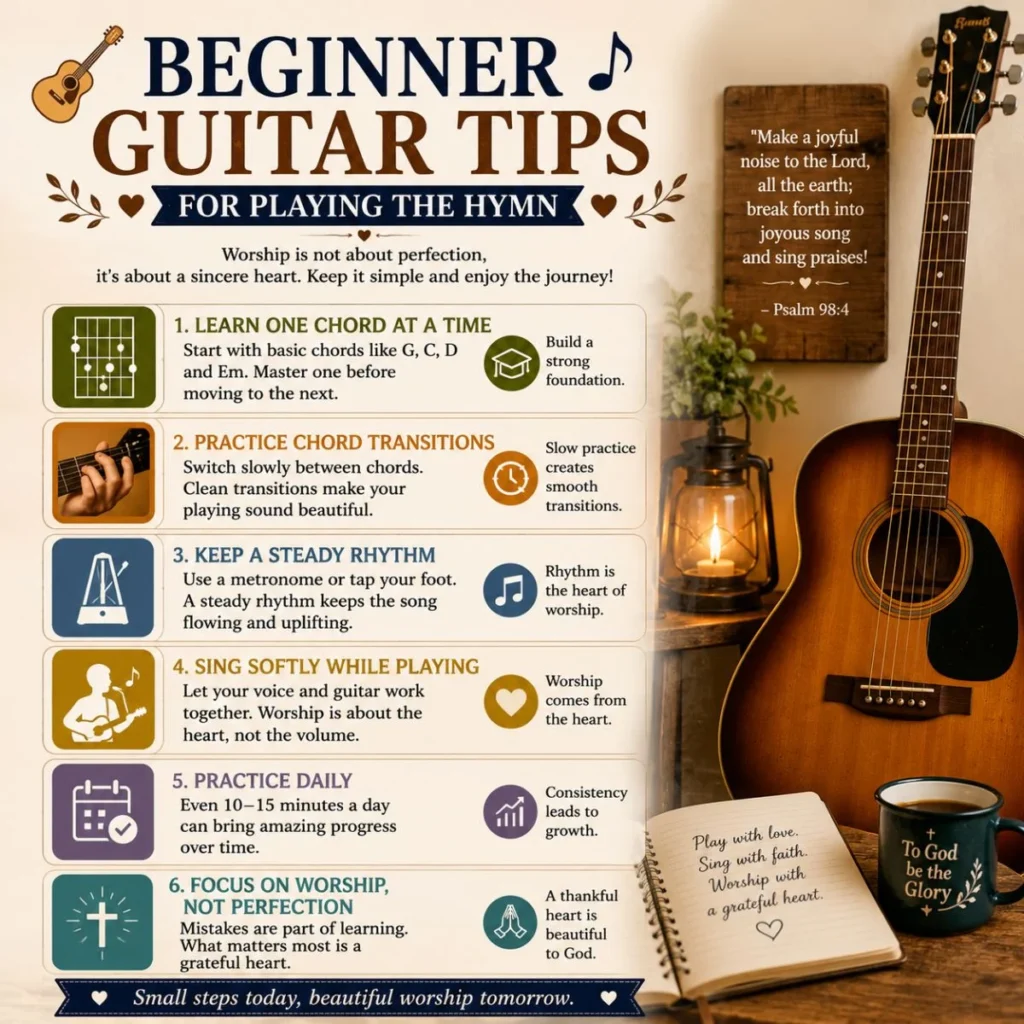
If you are new to guitar, start with simple goals instead of trying to play perfectly.
Easy tips to follow
Learn one chord at a time.
Practice chord transitions slowly.
Keep a steady rhythm.
Sing softly while playing.
Focus on worship rather than technique.
Practice for 10 to 15 minutes each day.
Progress may seem slow at first. However, consistency builds confidence over time.
“Small daily practice sessions often create lasting progress.”
🎹 Piano Tips for Beginners
Many churches also play this hymn on the piano because its melody is gentle and easy to follow.
Here are a few simple suggestions.
Begin with your right hand melody.
Add left hand chords gradually.
Play at a comfortable pace.
Keep your movements relaxed.
Allow the words to guide your emotions.
Do not rush through the song.
Even a simple version can sound beautiful.
🏡 Ways to Use This Hymn at Home
Worship does not have to stay inside church walls. Instead, it can become part of your daily routine.
Simple ideas for families
Sing it before dinner.
Play it during evening devotion.
Use it during Thanksgiving gatherings.
Add it to your prayer time.
Teach it to children.
Play it softly while journaling.
These small habits can create meaningful traditions.
🙏 A Prayer Inspired by This Hymn
Dear God,
Thank You for every blessing You have placed in our lives.
Thank You for the people who love us, the opportunities we receive, and the lessons that help us grow.
Please remind us to stay grateful, even during difficult seasons.
Fill our hearts with peace and help us trust Your timing.
Guide our steps, strengthen our faith, and teach us to recognize Your goodness every day.
May our lives become a reflection of gratitude.
Amen.
🍁 A Short Prayer for Busy Days
Heavenly Father,
Life often becomes noisy and overwhelming.
Help us slow down and notice the blessings we sometimes overlook.
Replace worry with peace and replace fear with trust.
Teach us to praise You, not only during joyful moments but also during uncertain seasons.
May gratitude become a daily habit.
Amen.
🍂 Everyday Ways to Live the Message of This Hymn
The hymn teaches a lesson we can apply every day.
You do not have to sing it constantly. Instead, try living its message.
Simple daily reminders
Start each morning with gratitude.
Thank God before meals.
Write down three blessings every night.
Encourage someone who is struggling.
Celebrate small victories.
Appreciate ordinary moments.
End your day with a short prayer.
These tiny habits may seem simple. However, they can transform your perspective.
❤️ Why This Hymn Still Matters Today
The world moves quickly.
People are often distracted, overwhelmed, and exhausted.
That is exactly why this hymn remains relevant.
Its message is timeless.
It reminds us to pause.
It encourages us to be thankful.
Most importantly, it redirects our attention toward God’s goodness.
“Gratitude does not make life perfect, but it helps us recognize the beauty already present.”
🌎 Sharing This Hymn With Others
You never know who might need encouragement.
Consider sharing this hymn with:
Family members
Church friends
Children
Worship teams
Someone going through a difficult season
Sometimes a simple song can become someone’s answered prayer.
🍂 Extra Worship Ideas, FAQs, and Final Encouragement
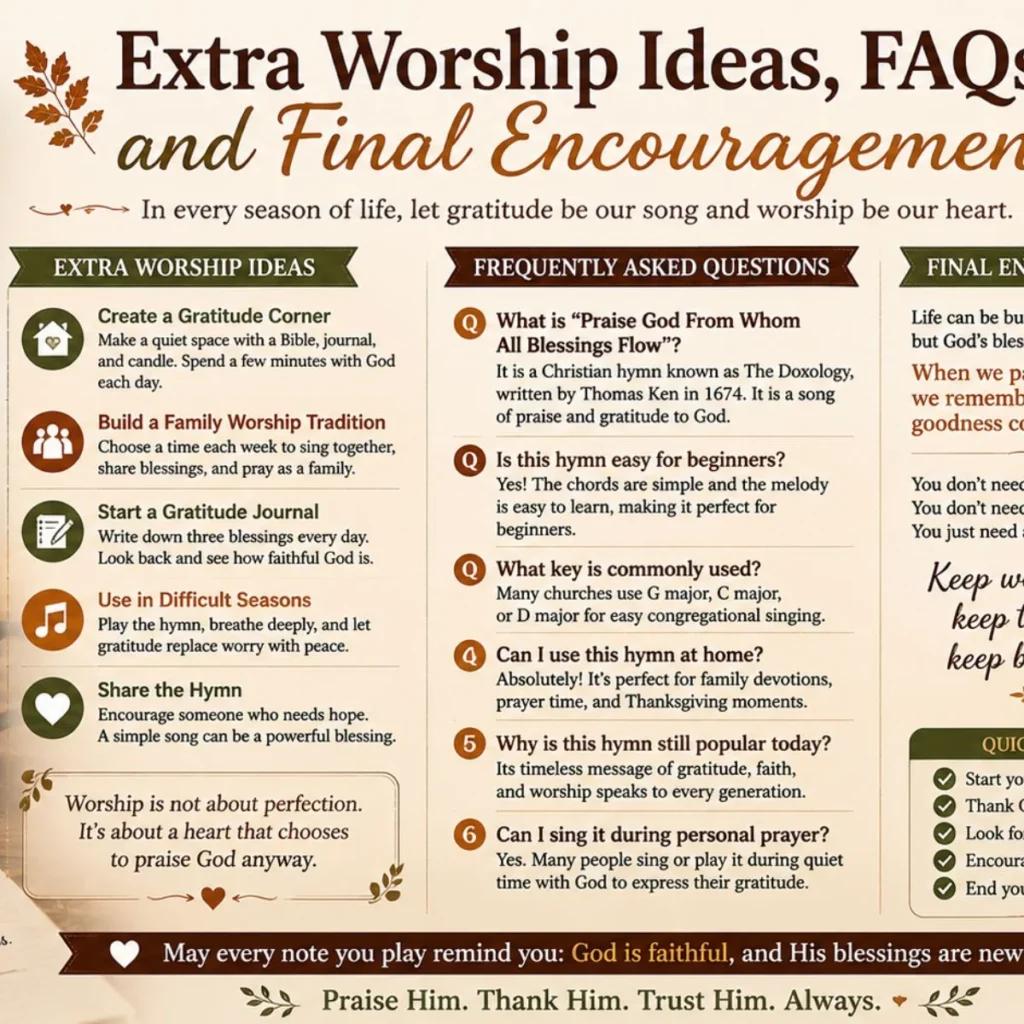
Learning praise god from whom all blessings flow chords is not simply about memorizing notes. Instead, it is about building a lifestyle of gratitude that stays with you every day.
As life changes, worship can become an anchor that brings peace, hope, and perspective.
🍁 Extra Ways to Make This Hymn Part of Your Life
You do not have to be a musician to enjoy this timeless song.
Here are simple ways to make it meaningful.
Create a gratitude corner
Place a Bible, journal, and candle in a quiet space.
Spend five minutes reflecting each day.
Write one blessing before ending your devotion.
Build a family worship tradition
Choose one evening every week.
Sing together before dinner.
Share one thing each person is thankful for.
Start a gratitude journal
Record three blessings every day.
Celebrate small victories.
Reflect on answered prayers.
Use it during difficult seasons
Play the hymn softly during stressful days.
Pause and take a few deep breaths.
Allow gratitude to replace anxious thoughts.
“Worship does not remove every challenge, but it changes how we walk through them.”
🎵 Why This Hymn Has Lasted for Centuries
Many worship songs come and go. However, this hymn continues to touch hearts.
Its message remains timeless because people will always need hope.
These simple words remind us that:
Gratitude creates peace.
Faith builds strength.
Worship unites generations.
God’s goodness never changes.
Because of that, this hymn remains meaningful today.
❓FAQs About Praise God From Whom All Blessings Flow Chords
1. What is “Praise God From Whom All Blessings Flow”?
It is a Christian hymn commonly called The Doxology. Churches have sung it for hundreds of years as a song of praise and gratitude.
2. Is this hymn easy for beginners to play?
Yes. Many simple arrangements use beginner-friendly chords and an easy melody.
3. What key is commonly used?
Many churches sing it in G major, C major, or D major because these keys are comfortable for congregational singing.
4. Can I learn this hymn without musical experience?
Absolutely. Start slowly and focus on enjoying worship rather than achieving perfection.
5. Can families use this hymn at home?
Yes. Many families sing it during prayer time, before meals, or during evening devotions.
6. Why is this hymn still popular today?
Its message of gratitude, faith, and praise remains relevant in every generation.
7. Can I use this hymn during personal prayer?
Yes. Many people sing or play it during quiet reflection and daily devotion.
❤️ Conclusion
Life moves quickly, and it is easy to become distracted by worries.
However, this beautiful hymn invites us to pause for a moment.
It reminds us that blessings are often already present around us.
The roof over our heads, the people we love, and the ordinary moments we experience each day are all gifts worth celebrating.
Most importantly, praise god from whom all blessings flow chords is not only about learning music. It is about developing a grateful heart.
You do not need perfect singing.
You do not need advanced musical skills.
Instead, bring your authentic self, a thankful spirit, and a willingness to worship.
May every note you play remind you that God’s blessings are present in every season of life. 🙏🎵

Awais Bilal is the Author of Blessingera, a website dedicated to sharing inspiring blessings, prayers, and positive messages for everyday life.